

Keyword research for beginners to find customer search words

Keyword Research: Find What Customers Search

Keyword Research: Finding the Words Your Customers Use to Search Online

Before creating content or selling anything online, you must understand what your audience is searching for and why. This is where keyword research becomes extremely important.

Keyword research helps you discover the exact words and phrases people type into search engines when they are looking for information, products, or services like yours. When you choose the right keywords, your website attracts the right visitors, not just random traffic.

Think of keywords as a bridge between your audience and your website. If the bridge is strong, people reach you easily. If it’s weak or wrong, they never find you.


What Are Keywords?

In SEO, a keyword is not just a single word. It can be a word or a phrase that users type into Google or other search engines.

Types of Keywords

Single-word keywords

  • tea
  • travel
  • car

These have very high search volume but unclear intent.

Short-tail keywords

  • green tea
  • budget travel
  • electric car

They are slightly more specific but still competitive.

Long-tail keywords

  • best organic green tea for weight loss in India
  • affordable family travel packages from Delhi
  • cheapest electric car under 10 lakh

Long-tail keywords are less competitive and show clear search intent. A person using these searches usually knows exactly what they want and is closer to taking action.

👉 Example:
Someone searching for “tea” could be doing research or just browsing.
But someone searching for “best organic green tea for weight loss in India” is ready to buy or learn something specific.


Brainstorming Keyword Ideas: Start With What You Know

Before using any tool, start with your own knowledge. Write down ideas related to your business.

Ask Yourself:

1. What products or services do I offer?

  • Ayurvedic hair oil
  • Yoga classes in Mumbai
  • Custom wedding invitations

2. What problems do I solve?

  • Hair fall control
  • Stress relief
  • Unique wedding designs

3. What questions do customers ask?

  • How to use Ayurvedic oil for hair growth?
  • Are online yoga classes effective?
  • What is the cost of wedding invitations in Delhi?

4. What are the related words or synonyms?

  • Hair care
  • Meditation
  • Marriage invites

5. What keywords do competitors use?
Look for inspiration, not copying.

💡 Pro Tip:
Talk to customers or read comments, emails, and reviews. They often use the exact words your future customers will search for.


Simple Keyword Research Tools (Free & Easy)

You don’t need expensive tools when you’re starting. These free tools are enough.

1. Google Keyword Planner (Free)

  • Shows average monthly searches
  • Gives keyword ideas
  • Shows competition level (for ads, but still useful)

👉 Use it to expand your keyword list and check popularity.


2. Ubersuggest (Free + Paid)

  • Shows search volume
  • SEO difficulty
  • Related keyword ideas

👉 Select your country (India) for better results.


3. Google Search (Very Powerful & Free)

Just type your keyword into Google and observe:

  • Autocomplete suggestions
  • People Also Ask questions
  • Related searches at the bottom

These are real searches from real users.


Example: Using Google Search

Search for “Ayurvedic hair oil”

You may see:

Autocomplete

  • Ayurvedic hair oil for hair growth
  • Ayurvedic hair oil benefits

People Also Ask

  • Which Ayurvedic oil is best for hair growth?
  • Can I apply Ayurvedic oil daily?

Related Searches

  • Best hair oil for hair fall
  • Bhringraj oil benefits

👉 These are excellent long-tail keyword ideas.


Understanding Keyword Metrics (Simple Explanation)

You only need to focus on two things:

Search Volume

  • High volume = more searches but more competition
  • Low volume = fewer searches but easier to rank

Keyword Difficulty

  • High difficulty = hard to rank
  • Low difficulty = good opportunity

🎯 Your goal:
Choose keywords with decent search volume and low competition.


Long-Tail Keywords: Your SEO Secret Weapon

Long-tail keywords are longer and more specific.

Short-tail: coffee
Long-tail: best espresso coffee machine for home India

Why Long-Tail Keywords Work Better

  • Less competition
  • Higher conversion rate
  • More targeted traffic

Someone searching for “affordable yoga classes in Mumbai for beginners” is more likely to enroll than someone searching for “yoga”.


Mapping Keywords to Website Pages

Each page should focus on one main keyword and a few related keywords.

❌ Don’t use all keywords on one page
✅ Match keywords with search intent

Example Keyword Mapping Table

Page Primary Keyword Secondary Keywords Search Intent
/products/organic-honey buy organic honey online organic honey India, pure honey Transactional
/blog/benefits-organic-honey benefits of organic honey honey health benefits Informational
/services/seo-audits SEO audit services Mumbai website SEO check Commercial
/blog/how-to-start-a-blog how to start a blog in India blogging tips for beginners Informational

Final Thoughts

Keyword research is the foundation of SEO. It helps your content reach the right audience at the right time. This is not a one-time task—update your keywords as trends and customer behavior change.

When you understand how people search, you can create content that truly helps them—and that’s how you grow online.

Understanding audience and search intent for effective SEO strategy

Understanding Audience for SEO: A Beginner’s Guide

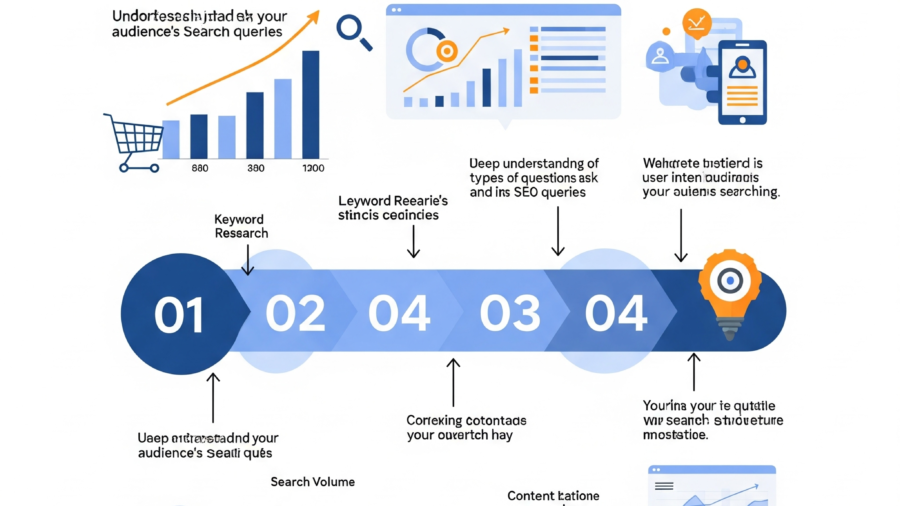
Understanding your audience for SEO is the first and most important step before working on keywords or website changes. Just like you cannot sell a product without knowing your customers, you cannot succeed with SEO unless you understand who is searching, what problems they face, and how they use search engines to find solutions.

Before diving deeper into technical optimizations, it’s essential to focus on user needs, search behavior, and intent. This approach helps attract the right visitors instead of wasting time and effort on the wrong audience.

SEO Is About Solving Problems, Not Just Selling Products

Many businesses focus only on what they sell:

  • “We sell handmade leather bags”

  • “We provide digital marketing services”

But people don’t search like that. They search because they have a problem or requirement.

For example:

  • Someone may need a durable office bag

  • Someone may want a unique gift

  • Someone may be looking for ethical or sustainable products

Similarly, users don’t just search for “SEO services.” They search things like:

  • “My website is not ranking on Google”

  • “How to get more customers online”

  • “Affordable marketing for small businesses”

When your content focuses on solving these real problems, your website becomes more relevant to search engines and users.

Creating Customer Personas for Better SEO

A customer persona is a simple profile of your ideal customer. It helps you understand how your audience thinks and searches online.

Ask these questions:

  • Who are they? (age, location, profession)

  • What are their goals?

  • What problems do they face?

  • What words do they use when searching?

  • What frustrates them about existing options?

Example Persona

Name: Priya
Location: Bengaluru
Profession: Working professional
Goal: A stylish, long-lasting work bag
Challenge: Avoids mass-produced, low-quality products
Search terms:

  • “handcrafted office bags India”

  • “sustainable leather bags”

  • “ethical fashion brands India”

By keeping Priya in mind, you can create content that matches real search queries.

Understanding Search Intent: Why Users Search

Search intent explains why someone types a query into Google. Matching intent is critical for SEO success.

1. Informational Intent

Users want answers or knowledge.
Examples:

  • “What is GST?”

  • “How to start a blog”

Best content: blog posts, guides, FAQs.

2. Navigational Intent

Users want a specific website or page.
Examples:

  • “Flipkart login”

  • “YouTube Studio”

Best content: brand pages, login pages.

3. Transactional Intent

Users are ready to buy or take action.
Examples:

  • “Buy organic tea online”

  • “SEO services in India”

Best content: product pages, service pages.

4. Commercial Investigation

Users are comparing options before buying.
Examples:

  • “Best laptops for students India”

  • “Top digital marketing agencies”

Best content: comparisons, reviews, buyer guides.

Creating content that matches the right intent improves rankings and user satisfaction.

Why Search Intent Matters for SEO

If someone searches “how to fix a leaking tap,” they expect a guide—not a sales page.
If they search “buy organic tea Delhi,” they expect prices and product listings.

Search engines reward pages that match user intent, so aligning your content with intent improves visibility and trust.

Where Your Audience Spends Time Online

Knowing where your audience is active helps strengthen your SEO indirectly:

  • Social media promotion can drive traffic

  • Industry blogs can provide backlink opportunities

  • Online communities reveal common questions

While Google is the main focus, these platforms help amplify your content and authority.

Final Thoughts

Understanding your audience is the foundation of successful SEO. When you know who you are targeting, what problems they face, and how they search, SEO becomes easier and more effective.

Instead of guessing, you create content that genuinely helps users—and that’s exactly what search engines want to rank.

Social media marketing in India 2025

Social Media Marketing in India: Beginner’s Guide 2025

Social media marketing in India 2025 plays a crucial role in helping businesses grow online. With the rise of AI tools, short-form videos, and visual storytelling, brands must use social platforms smartly to stay visible and competitive in the digital space.

Platforms such as Facebook, Instagram, YouTube, LinkedIn, and X (Twitter) are no longer used only for entertainment. They have become powerful tools for brand building, customer engagement, and business growth in India.

This guide explains social media marketing in simple language and shows how Indian businesses can use it effectively.

What Is Social Media Marketing for Indian Businesses?

Social media marketing is the process of promoting a brand, product, or service through social media platforms. It involves:

  • Creating and sharing posts (images, videos, reels, and stories)

  • Engaging with followers through comments and messages

  • Running paid social media advertisements

  • Tracking performance using analytics tools

The main aim is not just promotion, but building trust, engagement, and long-term relationships with the audience.

Why Social Media Marketing Is Important in India

India is one of the largest social media markets in the world. This makes social platforms essential for businesses of all sizes.

Massive Social Media User Base in India

India has hundreds of millions of active users on platforms like Instagram, YouTube, and Facebook. This allows brands to reach a large audience at a low cost.

Highly Targeted Digital Marketing Opportunities

Social platforms allow businesses to target users based on age, location, language, interests, and online behavior, making marketing more effective.

Mobile-First Social Media Users

Most Indians access social media through smartphones. Content should be mobile-friendly, visual, and easy to consume.

Cultural and Regional Diversity

India has multiple languages and cultures. Brands that create regional and relatable content perform better on social platforms.

Direct Customer Interaction and Feedback

Businesses can communicate directly with customers, answer queries, collect feedback, and build loyal communities.

Benefits of Social Media Marketing for Businesses

  • Increases brand awareness and online visibility

  • Builds customer trust and engagement

  • Offers cost-effective advertising solutions

  • Drives traffic to websites and landing pages

  • Helps generate quality leads and sales

  • Provides valuable insights through analytics

Effective Social Media Strategies for Business Growth

Understand Your Target Audience

Know who your customers are, their interests, and which platforms they use the most.

Choose the Right Social Media Platforms

Focus only on platforms where your audience is active instead of trying to be everywhere.

Create Engaging Visual Content

Short videos, reels, images, and stories perform better and get higher engagement.

Maintain Consistency in Posting

Regular posting helps keep your brand visible and builds long-term trust.

Engage Actively With Followers

Reply to comments and messages to build strong relationships and credibility.

Use Paid Social Media Advertising Smartly

Paid ads help reach the right audience quickly. Start small and optimize campaigns using data.

Collaborate With Relevant Influencers

Influencer marketing helps increase reach and trust, especially in niche markets.

Track Performance and Improve Strategy

Use insights and analytics to understand what works and improve your results.

Final Thoughts on Social Media Marketing in India

Social media marketing offers huge growth opportunities for Indian businesses. With the right strategy, consistent effort, and meaningful engagement, brands can connect better with their audience and grow sustainably.

Focus on understanding your audience, creating quality content, and staying active on the right platforms. Success on social media takes time, but with patience and the right approach, it delivers long-term results.