importance-of-digital-marketing.png

Importance of Digital Marketing for Businesses in India

Why the Importance of Digital Marketing Is Growing in India In the previous chapter, we explained the meaning of digital marketing and its importance. Now, let’s explore why digital marketing has become a necessity, not just an option—especially for businesses operating in a fast-growing and competitive market like India. The Rise of the Digital Consumer and Online Marketing in India The biggest reason businesses must adopt digital marketing is simple: customers are online.India has seen massive growth in internet access and smartphone usage. Today, millions of people spend hours online every day browsing social media, searching for information, shopping, and watching digital content. Why this matters: Wide reach: Digital platforms allow businesses to reach people across cities, towns, and villages. Mobile-first users: Smartphones are the main way Indians access the internet, making mobile-friendly marketing essential. Active online behavior: Consumers research products, compare prices, and interact with brands online before making decisions. Precision Targeting: A Key Benefit of Digital Marketing Traditional marketing often reaches a broad audience, many of whom may not be interested. Digital marketing, on the other hand, allows businesses to target the right people. With digital tools, you can focus on: Age groups Locations Interests Online behavior This targeted approach helps deliver relevant messages, improving engagement and results. Measurable Results Show the Importance of Digital Marketing One major advantage of digital marketing is that results can be measured accurately. What you can track: Website traffic Click-through rates Conversions Engagement levels Advertising performance This data helps businesses understand what is working and what needs improvement, allowing continuous optimization for better outcomes. Cost-Effective Online Marketing for Small and Growing Businesses For startups, small businesses, and growing companies in India, digital marketing is often more affordable than traditional advertising. Key benefits: Flexible budgets: Start small and increase spending as results improve. Better return on investment: Targeted campaigns reduce wasted spending. Easy scalability: Successful campaigns can be expanded quickly. This makes digital marketing suitable for businesses at any stage. Building Brand Awareness Through Digital Marketing Channels Digital platforms help businesses build strong brand visibility and connect directly with their audience. How brands benefit: Consistent online presence: Regular activity builds trust and recognition. Two-way communication: Social media allows direct interaction with customers. Value-driven content: Helpful blogs, videos, and posts position brands as industry experts. How Digital Marketing Creates a Competitive Advantage In a competitive market like India, businesses using digital marketing stay ahead. Your audience is already online Competitors are actively using digital channels Trends change quickly in the digital world A strong online presence helps businesses stay relevant and adapt faster than those relying only on traditional methods. Customer Loyalty and Long-Term Benefits of Digital Marketing Digital marketing is not only about gaining new customers—it also helps retain existing ones. Loyalty-building strategies include: Personalized email communication Quick online customer support Loyalty programs and special offers Regular engagement through content and social media Satisfied customers are more likely to return and recommend your brand to others. Final Thoughts Digital marketing has become an essential part of modern business success. With its ability to reach the right audience, measure performance, control costs, and build long-term relationships, it offers unmatched advantages—especially in a digitally growing country like India. Businesses that embrace digital marketing today are better prepared for sustainable growth tomorrow.  

Importance of Digital Marketing for Businesses in India Read More »
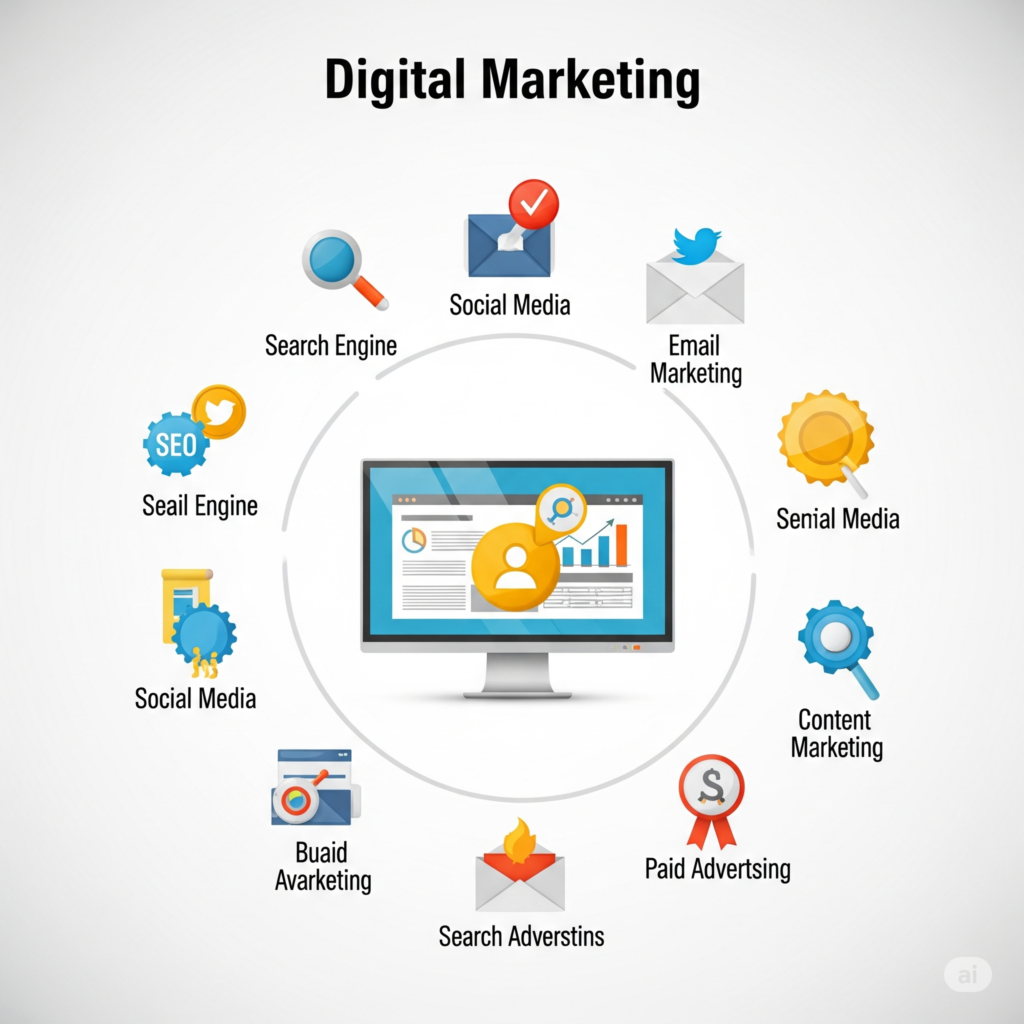
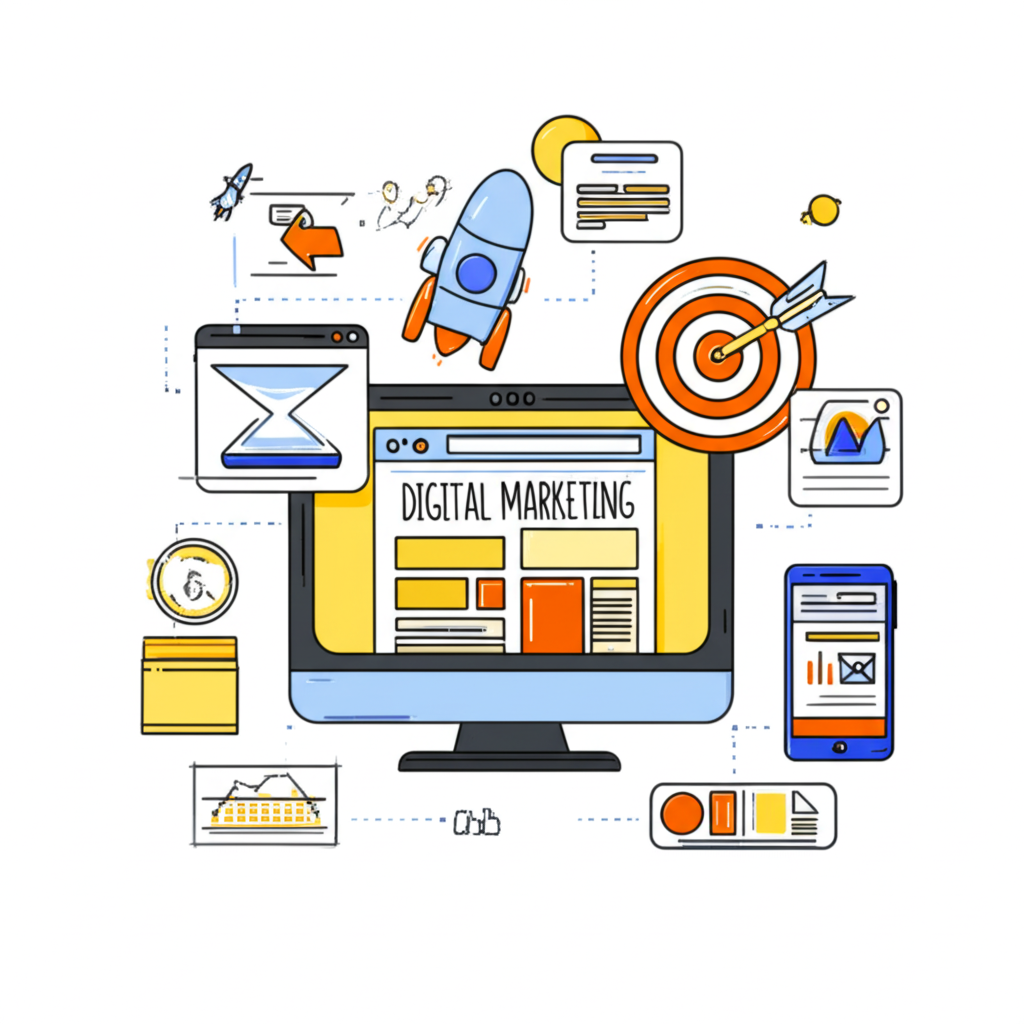
llustration showing digital marketing concepts like website, social media, search engine, and online promotion

Digital Marketing Explained: A Simple Guide for Beginners

Welcome to the world of online marketing! In today’s internet-driven age, businesses use digital tools and platforms to reach customers, promote their brand, and grow effectively. Understanding digital marketing basics is important for anyone starting a business or learning modern marketing skills. 1. Understanding Digital Marketing At its core, digital marketing means promoting products or services using digital devices and the internet. Companies connect with customers through websites, search engines, social media platforms, email, and mobile applications. Unlike traditional advertising methods such as newspapers or television, this modern marketing approach allows businesses to communicate in a more targeted, interactive, and measurable way. 2. Digital Marketing vs Traditional Marketing Here is a simple comparison to understand the difference: Feature Traditional Marketing Digital Marketing Medium Print, TV, radio Internet, mobile, digital platforms Reach Broad audience Targeted audience Interaction One-way Two-way engagement Measurement Hard to track Easy to measure Cost High Flexible and budget-friendly 3. Why Digital Marketing Is Important Today People spend a large part of their time online—searching for information, shopping, watching videos, and using social media. This shift has made digital promotion essential for businesses. Key Benefits: Reach local and global audiences Target users based on interests and behavior Track campaign performance in real time Engage directly with customers Cost-effective for small businesses Personalized communication This is why learning digital marketing concepts has become essential in today’s business world. 4. Main Digital Marketing Channels Online marketing includes different strategies that work together: Search Engine Optimization (SEO) Improving website visibility in search engine results without paid ads. Paid Advertising (PPC / SEM) Running ads on platforms like Google Ads and paying only when users click. Social Media Marketing Using platforms such as Facebook, Instagram, LinkedIn, and X to promote brands. Content Marketing Creating blogs, videos, and infographics to attract and educate users. Email Marketing Sending targeted emails to build trust and nurture leads. Video Marketing Using video content to explain ideas and increase engagement. Mobile Marketing Reaching users through mobile-friendly websites, apps, and SMS. Affiliate Marketing Earning commissions by promoting products or services. 5. The Digital Marketing Funnel To fully understand how digital marketing works, it’s important to know the customer journey. Awareness – Users discover your brand Consideration – They explore your solutions Conversion – They become customers Loyalty – They return for repeat business Advocacy – They recommend your brand Each stage requires a different strategy to guide users smoothly. 6. Setting SMART Marketing Goals Clear goals help you measure success. Use the SMART framework: Specific – Clearly defined Measurable – Trackable results Achievable – Realistic targets Relevant – Business-focused Time-bound – Fixed deadline Example: Increase organic traffic by 25% in 3 months. 7. Knowing Your Target Audience Successful online campaigns depend on understanding your audience. Buyer Personas These represent your ideal customers based on age, interests, problems, and behavior. Customer Journey Mapping This shows how users interact with your brand from first visit to purchase. Understanding these helps improve campaign effectiveness and user experience. 8. Ethical Digital Marketing Practices Ethics play a key role in digital success: Respect user privacy Follow data protection laws Be transparent and honest Avoid misleading content Provide real value Trust-based marketing leads to long-term growth. Final Thoughts Now that you understand the basics of digital marketing, you can see why it is a powerful tool for businesses of all sizes. With the right strategy, ethical practices, and consistent effort, digital channels can help build strong brands and lasting customer relationships.

Digital Marketing Explained: A Simple Guide for Beginners Read More »

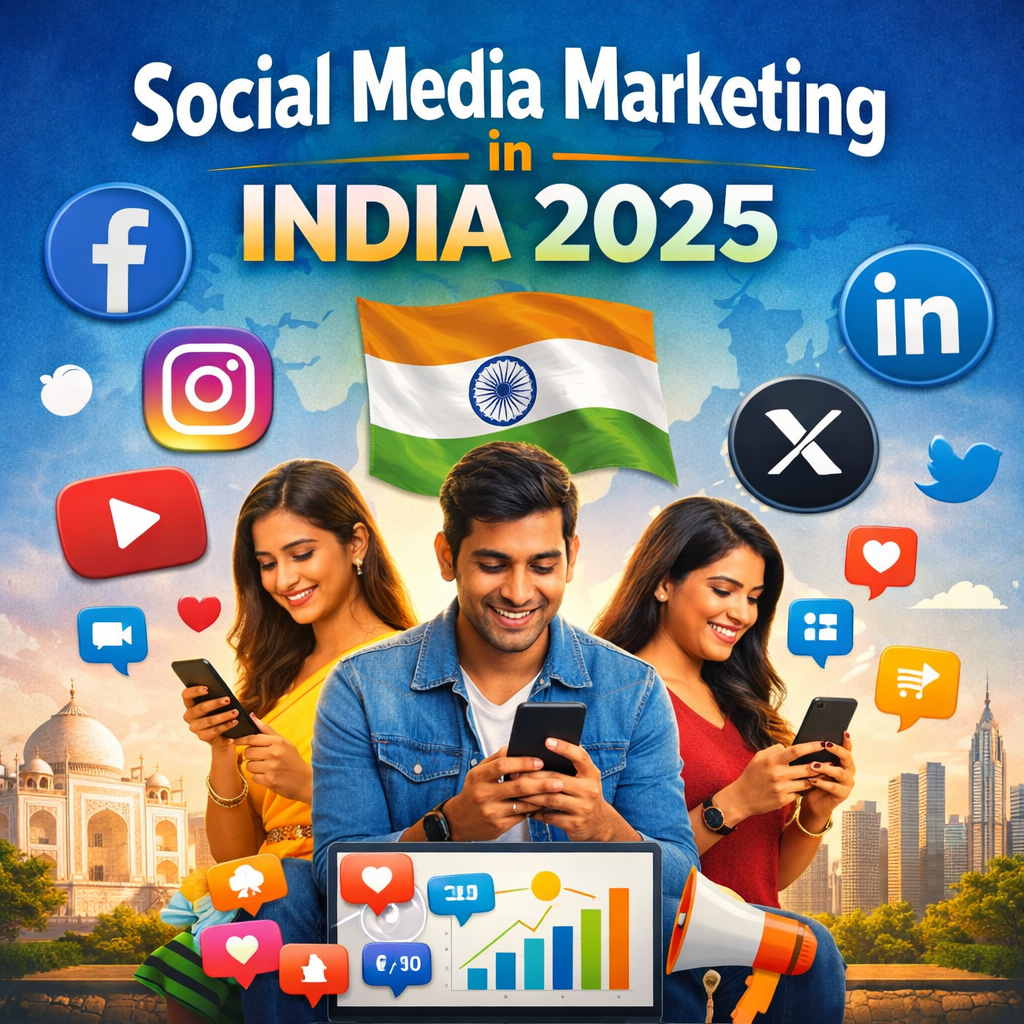
Social media marketing in India 2025

Social Media Marketing in India: Beginner’s Guide 2025

Social media marketing in India 2025 plays a crucial role in helping businesses grow online. With the rise of AI tools, short-form videos, and visual storytelling, brands must use social platforms smartly to stay visible and competitive in the digital space. Platforms such as Facebook, Instagram, YouTube, LinkedIn, and X (Twitter) are no longer used only for entertainment. They have become powerful tools for brand building, customer engagement, and business growth in India. This guide explains social media marketing in simple language and shows how Indian businesses can use it effectively. What Is Social Media Marketing for Indian Businesses? Social media marketing is the process of promoting a brand, product, or service through social media platforms. It involves: Creating and sharing posts (images, videos, reels, and stories) Engaging with followers through comments and messages Running paid social media advertisements Tracking performance using analytics tools The main aim is not just promotion, but building trust, engagement, and long-term relationships with the audience. Why Social Media Marketing Is Important in India India is one of the largest social media markets in the world. This makes social platforms essential for businesses of all sizes. Massive Social Media User Base in India India has hundreds of millions of active users on platforms like Instagram, YouTube, and Facebook. This allows brands to reach a large audience at a low cost. Highly Targeted Digital Marketing Opportunities Social platforms allow businesses to target users based on age, location, language, interests, and online behavior, making marketing more effective. Mobile-First Social Media Users Most Indians access social media through smartphones. Content should be mobile-friendly, visual, and easy to consume. Cultural and Regional Diversity India has multiple languages and cultures. Brands that create regional and relatable content perform better on social platforms. Direct Customer Interaction and Feedback Businesses can communicate directly with customers, answer queries, collect feedback, and build loyal communities. Benefits of Social Media Marketing for Businesses Increases brand awareness and online visibility Builds customer trust and engagement Offers cost-effective advertising solutions Drives traffic to websites and landing pages Helps generate quality leads and sales Provides valuable insights through analytics Effective Social Media Strategies for Business Growth Understand Your Target Audience Know who your customers are, their interests, and which platforms they use the most. Choose the Right Social Media Platforms Focus only on platforms where your audience is active instead of trying to be everywhere. Create Engaging Visual Content Short videos, reels, images, and stories perform better and get higher engagement. Maintain Consistency in Posting Regular posting helps keep your brand visible and builds long-term trust. Engage Actively With Followers Reply to comments and messages to build strong relationships and credibility. Use Paid Social Media Advertising Smartly Paid ads help reach the right audience quickly. Start small and optimize campaigns using data. Collaborate With Relevant Influencers Influencer marketing helps increase reach and trust, especially in niche markets. Track Performance and Improve Strategy Use insights and analytics to understand what works and improve your results. Final Thoughts on Social Media Marketing in India Social media marketing offers huge growth opportunities for Indian businesses. With the right strategy, consistent effort, and meaningful engagement, brands can connect better with their audience and grow sustainably. Focus on understanding your audience, creating quality content, and staying active on the right platforms. Success on social media takes time, but with patience and the right approach, it delivers long-term results.

Social Media Marketing in India: Beginner’s Guide 2025 Read More »

Social media marketing for beginners

Social Media Marketing for Beginners: Build Your Brand Online

In today’s digital world, social media plays a major role in how people discover brands, products, and services. Platforms like Facebook, Instagram, LinkedIn, and YouTube allow businesses to connect directly with their audience, build trust, and grow their online presence. Social Media Marketing (SMM) helps businesses promote their brand, engage customers, and achieve marketing goals through these platforms. What Is Social Media Marketing? Social Media Marketing is the use of social media platforms to promote products or services and connect with a target audience. It includes creating content, sharing posts, running paid advertisements, and interacting with followers. Businesses use social media strategies to increase brand awareness, drive website traffic, and build long-term customer relationships. Key Components of Social Media Marketing 1. Content Creation Creating valuable and engaging content is the foundation of social media strategies. This content can include images, short videos, reels, blog links, infographics, and educational posts. Each platform works differently, so content should be tailored to match the audience and style of each social media channel. 2. Audience Engagement Engagement is more than just posting content. It involves replying to comments, responding to messages, and participating in conversations with followers. Regular interaction helps build trust, improve brand credibility, and create a loyal online community. 3. Analytics and Performance Tracking Social media platforms provide insights such as reach, likes, shares, comments, and clicks. Tracking these metrics helps businesses understand what content performs well. By analyzing data, marketers can improve their strategy and focus on content that delivers better results. 4. Paid Advertising Campaigns Social media advertising allows businesses to reach specific audiences based on age, location, interests, and behavior. Paid ads are cost-effective and help increase visibility quickly, especially for new brands or product launches. 5. Influencer Marketing Influencer collaborations involve partnering with creators who already have a trusted audience. Their recommendations can increase brand credibility and help reach new customers more effectively. Choosing influencers who align with your brand values is key to successful campaigns. Benefits of Social Media Marketing Increases brand awareness and online visibility Builds stronger relationships with customers Provides cost-effective advertising options Offers valuable insights into customer behavior Helps drive website traffic, leads, and sales How to Get Started with Social Media Marketing If you’re new to marketing on social platforms, follow these simple steps: Set clear goals such as brand awareness, leads, or sales Identify your target audience and understand their interests Choose the right platforms where your audience is active Create a content plan and post consistently Engage with your audience and respond promptly Monitor performance and adjust strategies based on insights Final Thoughts Social media marketing is a powerful tool for building your brand online. With the right strategy, consistent effort, and meaningful engagement, businesses of all sizes can grow and succeed on social media platforms. Start small, stay consistent, and focus on providing value to your audience.

Social Media Marketing for Beginners: Build Your Brand Online Read More »

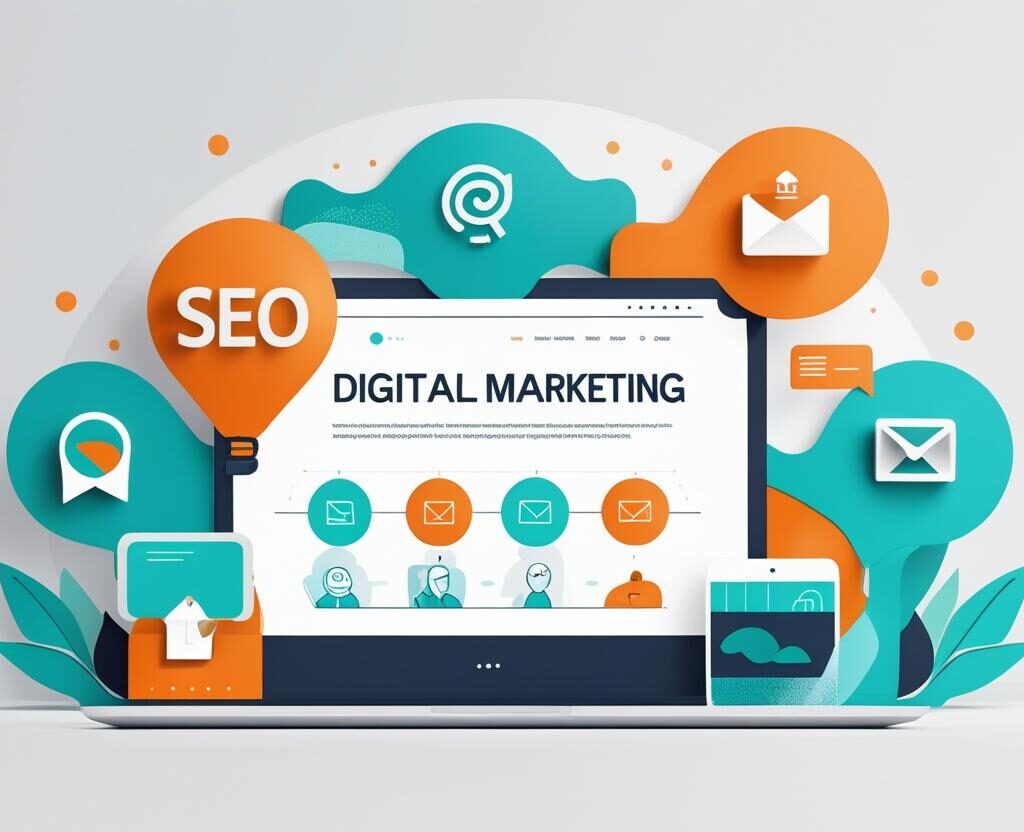
What is digital marketing

Digital Marketing 101: A Beginner’s Guide

What Is Digital Marketing? A Beginner-Friendly Guide In today’s digital age, having a strong online presence is essential for businesses of all sizes. Digital marketing provides a powerful way to reach customers, build brand awareness, and grow sales using online platforms. From small startups to large companies, businesses rely on digital marketing to connect with their audience where they spend most of their time—online. What Is Digital Marketing? Digital marketing simply means promoting products or services through the internet. It uses online channels such as websites, social media, search engines, and email to reach potential customers. For example, when you see an ad on Instagram, search for something on Google, or receive a promotional email, you are experiencing digital marketing. Instead of traditional advertising like newspapers or billboards, digital marketing focuses on modern platforms such as: Websites – Your online business hub Social Media – Platforms like Facebook, Instagram, YouTube, and X Search Engines – Helping users find you through SEO or paid ads Email Marketing – Sending updates, offers, and newsletters Online Advertising – Display and search ads across websites and apps The main goal is to reach the right audience at the right time and measure results accurately. Why Is Digital Marketing Important? Digital marketing has become essential because it offers many advantages over traditional marketing methods. It helps businesses reach a global audience, not just local customers It is cost-effective, especially for small and medium businesses Businesses can target specific audiences based on interests, age, location, and behavior Results can be tracked in real time, such as clicks, traffic, and sales It provides valuable data and insights for better decision-making Builds brand awareness and trust through consistent online visibility Allows small businesses to compete with larger brands Marketing campaigns can be adjusted quickly when needed Online marketing works 24/7, reaching customers anytime Offers a strong return on investment (ROI) Key Components of Digital Marketing 1. Search Engine Optimization (SEO) SEO helps your website appear higher on search engines like Google. When people search for information, products, or services, SEO ensures your website is easy to find. SEO involves: Using the right keywords naturally in content Creating high-quality and helpful articles Improving website speed and mobile friendliness Earning backlinks from trusted websites SEO is a long-term strategy, but it brings consistent and free traffic to your website over time. 2. Content Marketing Content marketing focuses on creating valuable and informative content instead of directly selling products. This includes: Blog posts Articles Videos Infographics Podcasts By sharing helpful content, businesses build trust and credibility. Over time, customers are more likely to choose brands that educate and support them rather than push sales aggressively. 3. Social Media Marketing Social media marketing uses platforms like Facebook, Instagram, YouTube, and X to connect with audiences. It helps businesses: Share engaging content Build brand awareness Interact directly with customers Run targeted paid advertisements By responding to comments and messages, brands create stronger relationships and loyal communities. 4. Pay-Per-Click (PPC) Advertising PPC advertising allows businesses to show ads online and pay only when someone clicks on them. Popular PPC platforms include Google Ads and social media ads. PPC is useful for: Getting quick traffic Targeting specific audiences Controlling advertising budgets Tracking conversions and performance It is a powerful way to generate leads and sales quickly. 5. Email Marketing Email marketing is a direct way to communicate with people who have agreed to receive updates from your business. It is used for: Newsletters Product updates Promotional offers Customer relationship building Email marketing is affordable, easy to track, and highly effective when done correctly. How to Start Digital Marketing (Beginner Steps) If you’re new to digital marketing, start with these simple steps: Set clear goals (traffic, leads, sales, or brand awareness) Understand your target audience Choose the right platforms Create useful and engaging content Build a professional website Learn the basics of SEO and social media Start small and test strategies Analyze performance using tools like Google Analytics Improve and optimize continuously Stay updated with trends and tools Final Thoughts Digital marketing is no longer optional—it is essential for business growth in the modern world. With the right strategies, even small businesses can compete, grow, and succeed online. By learning digital marketing step by step and focusing on value, consistency, and trust, anyone can build a strong and sustainable online presence.

Digital Marketing 101: A Beginner’s Guide Read More »

Digital marketing trends in 2025

Digital Marketing Trends to Watch in 2025

Digital marketing trends for 2025 are changing faster than ever. With AI, short-form videos, and immersive technologies on the rise, businesses in India must adapt to stay competitive. Consumers are also becoming more conscious about privacy and trust, making it essential for brands to use these trends wisely.  1. AI-Driven Personalization: Top Digital Marketing Trend for 2025 Artificial Intelligence (AI) is transforming how brands connect with customers. In 2025, AI helps marketers understand user behavior in real time and deliver highly personalized experiences. From customized product recommendations to personalized emails and website content, AI makes marketing more relevant and engaging. For example, e-commerce platforms analyze browsing history and purchase patterns to suggest products users are more likely to buy. This improves customer satisfaction and boosts conversion rates. 2. Short-Form Video Content: A Key Digital Marketing Trend for 2025 Short-form videos remain one of the most powerful content formats in digital marketing. Platforms like Instagram Reels, YouTube Shorts, and similar video features continue to grow rapidly. In India, content in regional languages is gaining massive popularity. Brands that create short, engaging videos in local languages can connect more deeply with their audience. These bite-sized videos are easy to consume, highly shareable, and perfect for grabbing attention quickly. 3. Advanced Personalization Techniques in Digital Marketing Trends for 2025 Personalization in 2025 is no longer limited to adding a user’s name in an email. Consumers now expect brands to understand their preferences, interests, and needs. Marketers are using data to deliver personalized website experiences, targeted offers, and relevant content at the right time. When done correctly, personalization helps build stronger relationships and improves customer loyalty. 4. Metaverse and Immersive Experiences: Emerging Digital Marketing Trends for 2025 The metaverse and immersive technologies like Augmented Reality (AR) and Virtual Reality (VR) are still in the early stages in India, but their impact is growing. Brands are experimenting with virtual product trials, AR filters, interactive 3D experiences, and virtual showrooms. These technologies help create memorable brand experiences by blending the digital and physical worlds, making marketing more engaging and interactive. 5. Privacy, Transparency, and Trust: Essential Digital Marketing Trends for 2025 As digital usage increases, consumers are becoming more concerned about how their data is collected and used. In 2025, trust will be a key factor in digital marketing success. Businesses must focus on ethical marketing practices, follow data protection rules, and clearly communicate their privacy policies. Brands that respect user privacy and build transparent relationships will gain long-term customer trust. Final Thoughts Digital marketing in 2025 is not just about using the latest tools—it’s about understanding people. By embracing AI, video content, personalization, immersive experiences, and ethical data practices, businesses can stay competitive and grow sustainably. The future belongs to brands that adapt, connect authentically with their audience, and build trust in the digital world. ❓ Frequently Asked Questions Q1. What are the top digital marketing trends in 2025?AI-driven personalization, short-form video content, immersive experiences like AR/VR, data privacy, and advanced personalization are the key trends in digital marketing in 2025. Q2. Why is digital marketing important in 2025?Digital marketing helps businesses reach the right audience, measure performance, build trust, and stay competitive in an online-first world. Q3. How does AI help digital marketing in 2025?AI helps analyze customer behavior, automate campaigns, personalize content, and improve decision-making for better results. Q4. Is video marketing still effective in 2025?Yes, short-form video content continues to dominate, especially on mobile platforms and regional-language content in India. Q5. How can small businesses benefit from digital marketing in 2025?Small businesses can reach targeted audiences, control budgets, track performance, and grow faster using SEO, social media, and content marketing.

Digital Marketing Trends to Watch in 2025 Read More »

Digital marketing trends in 2025

Digital Marketing Strategies for 2025: Grow Your Business Online

In today’s fast-changing digital world, businesses must stay ahead to succeed. Digital marketing strategies for 2025 are no longer optional—they are essential for growth and visibility. Whether your goal is to reach the right audience, boost sales, or build a strong online presence, implementing these strategies will help your business compete effectively in India’s dynamic market. From social media campaigns to SEO and email marketing, understanding and applying the latest digital strategies is key to thriving in 2025. 1. Reach the Right Audience with Digital Marketing in 2025 Traditional advertising shows your message to everyone, even those who are not interested.Digital marketing is different. With tools like Google Ads, Facebook Ads, Instagram, and SEO, you can target: Specific age groups Locations (cities like Kochi, Bangalore, Delhi, Mumbai) Interests and online behavior Whether you are targeting students, working professionals, parents, or entrepreneurs, digital marketing helps you reach exactly the people who matter. 2. Cost-Effective Digital Marketing Strategies for Small Businesses in India  Not every business can afford TV ads, newspaper ads etc… Digital marketing offers affordable options: Social media ads with low daily budgets SEO for long-term organic traffic Email marketing with minimal cost Even small businesses and startups can compete with big brands using smart digital strategies.This makes digital marketing a game-changer in India, where SMBs dominate the market. 3. Track Digital Marketing Results and Improve ROI  One of the biggest advantages of digital marketing is data. You can easily track: Website visitors Clicks and conversions Leads and sales Customer engagement This data helps you understand what works and what doesn’t.You can improve campaigns, reduce waste, and get better return on investment (ROI). In 2025, businesses that use data-driven decisions will always stay ahead. 4. Build Trust and Long-Term Customer Relationships Digital marketing is not only about selling.It is about building relationships. Through: Social media interaction Helpful blog content Email newsletters Quick customer support You can create trust and loyalty.Customers prefer brands that communicate, educate, and engage — not just advertise. In the coming years, authentic connections will matter more than aggressive promotions. 5. Stay Competitive in a Digital-First World Your competitors are already online.They are ranking on Google, posting on social media, and running ads. If your business ignores digital marketing: You lose visibility You lose customers You lose relevance To survive and grow in 2025, businesses must adapt to digital trends, not resist them. SEO-Optimized Content Is the Backbone of Digital Success No digital strategy is complete without Search Engine Optimization (SEO). SEO helps: Your website rank on Google Customers find you organically Reduce dependency on paid ads By creating high-quality, SEO-friendly content, your business can attract consistent traffic and leads even while you sleep. Conclusion: Digital Marketing Is the Future of Business in India Digital marketing is not a passing trend.It is the foundation of modern business growth. By investing in digital marketing, you can: Reach the right audience Control your marketing budget Measure your results Build strong customer relationships Achieve long-term, sustainable growth 👉 The best time to start was yesterday. The next best time is today. Start building your digital presence now — and be ready for success in 2025 and beyond. ❓ Frequently Asked Questions Q1. Why is digital marketing important in 2025?Digital marketing is important in 2025 because most customers search, shop, and interact with brands online. It helps businesses reach the right audience, measure results, and grow efficiently. Q2. Is digital marketing suitable for small businesses in India?Yes, digital marketing is highly cost-effective for small and medium businesses. With SEO, social media, and low-budget ads, even small brands can compete with larger companies. Q3. What are the main digital marketing trends in 2025?Major trends include AI-driven marketing, SEO-focused content, short-form videos, personalized ads, voice search optimization, and data-based decision making. Q4. How does SEO help digital marketing?SEO helps your website rank higher on Google, brings organic traffic, increases brand visibility, and reduces dependency on paid advertising. Q5. Can beginners start a career in digital marketing in 2025?Yes, digital marketing is beginner-friendly. With basic skills in SEO, content writing, and social media, beginners can start freelancing, blogging, or working in companies.

Digital Marketing Strategies for 2025: Grow Your Business Online Read More »