Traditional Marketing vs Digital Marketing: Understanding the Key Differences
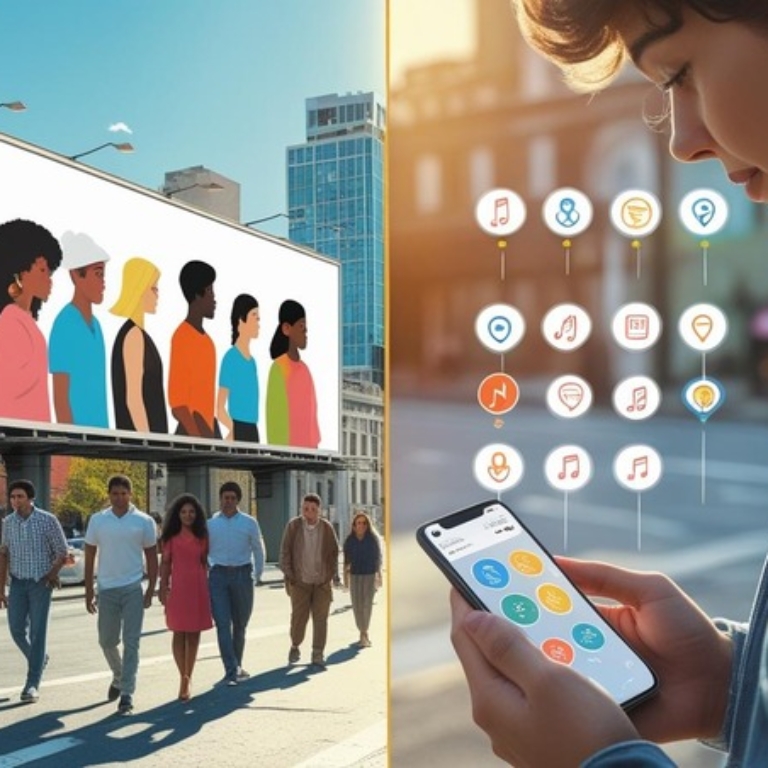
To understand modern marketing, it is important to compare traditional marketing vs digital marketing. While digital channels dominate today’s business environment, traditional marketing still plays a key role, especially in a diverse market like India. This chapter explores how both approaches differ, where each works best, and why combining them often delivers stronger results..
What Is Traditional Marketing?
Traditional marketing refers to promotional methods that existed before the internet and digital technology. These are offline marketing techniques used to reach audiences through physical and broadcast media.
Examples of Traditional Marketing:
-
Print media: Newspapers, magazines, brochures, flyers
-
Broadcast media: Television and radio advertisements
-
Direct mail: Postcards, catalogs, printed newsletters
-
Outdoor advertising: Billboards, posters, bus stop ads
-
Telemarketing: Sales calls
-
Event marketing: Trade shows, exhibitions, sponsorships
These methods are still effective for local reach and older audiences.
What Is Digital Marketing?
Digital marketing includes all marketing activities done using the internet and electronic devices. It helps businesses connect with customers online through multiple digital channels.
Examples of Digital Marketing:
-
Search Engine Optimization (SEO)
-
Pay-Per-Click advertising (PPC)
-
Social Media Marketing (SMM)
-
Content Marketing
-
Email Marketing
-
Video Marketing
-
Mobile Marketing
-
Affiliate Marketing
Digital marketing focuses on targeted, measurable, and interactive communication.
Key Differences Between Traditional and Digital Marketing
Reach and Targeting
-
Traditional marketing: Reaches a broad audience with limited targeting
-
Digital marketing: Allows precise targeting based on age, location, interests, and online behavior
Interactivity and Engagement
-
Traditional marketing: One-way communication with no instant feedback
-
Digital marketing: Two-way communication through comments, messages, polls, and chats
Measurement and Analytics
-
Traditional marketing: Difficult to measure results accurately
-
Digital marketing: Easy to track clicks, traffic, conversions, and ROI
Cost and Scalability
-
Traditional marketing: Often expensive and difficult to scale
-
Digital marketing: Budget-friendly, flexible, and easy to scale
Speed and Adaptability
-
Traditional marketing: Slow to launch and update
-
Digital marketing: Fast execution with real-time optimization
Advantages and Disadvantages
Traditional Marketing
Advantages
-
Strong local reach
-
Builds brand familiarity
-
Physical and tangible materials
-
Trusted by older audiences
Disadvantages
-
High cost
-
Limited targeting
-
Hard to measure results
-
Slow changes
-
Lower engagement with younger users
Digital Marketing
Advantages
-
Global and local reach
-
Precise targeting and personalization
-
Easy performance tracking
-
Cost-effective and scalable
-
Real-time interaction
-
Builds long-term customer relationships
Disadvantages
-
Requires technical skills
-
High online competition
-
Ad fatigue and ad blockers
-
Data privacy concerns
-
Frequent algorithm changes
-
Can feel complex for beginners
Integrated Marketing: The Best of Both Worlds
Today, the real question is not traditional or digital marketing, but how to use both together effectively. This is known as integrated marketing.
Example from the Indian Market:
-
A customer sees a car billboard (traditional)
-
Searches for it on Google (digital)
-
Watches a YouTube review (digital)
-
Sees a social media ad later (digital)
-
Visits the showroom for a test drive (traditional)
This journey shows how both marketing methods work together.
Final Thoughts
Traditional and digital marketing each have their own strengths. Traditional methods help build trust and brand awareness, while digital marketing drives measurable results and customer engagement.
Businesses that combine both strategies can reach wider audiences, improve conversions, and stay competitive—especially in a fast-growing market like India.
A balanced marketing approach delivers the most sustainable and effective results.
